
PubMed, London Edition
What beer, football and a cough conference taught me about how science actually moves
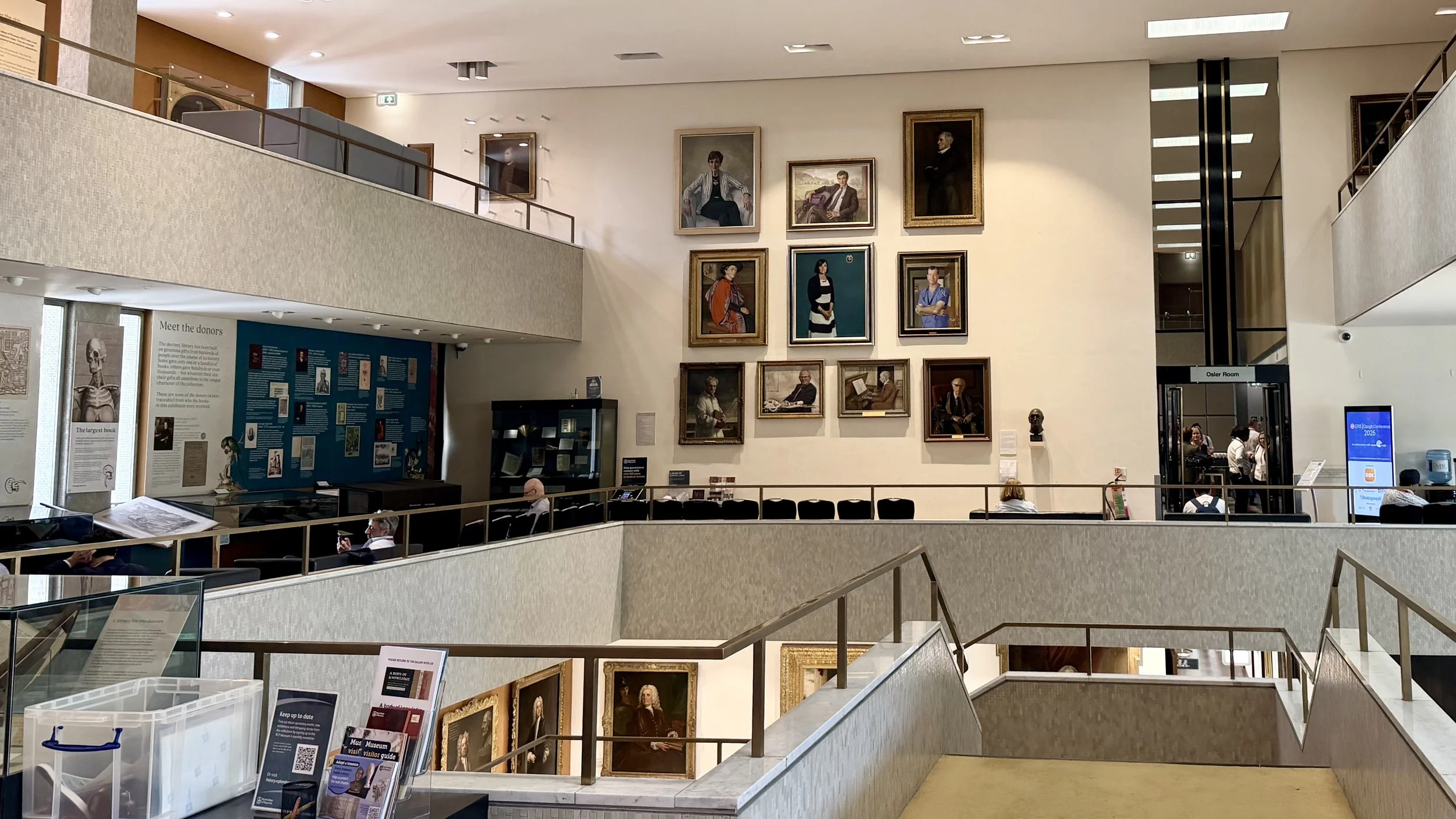
The main hall of the Royal College of Physicians where the ERS Cough Conference was held.
We live in the middle of an AI wave, and I keep catching myself asking the question: when/if the machine can do everything, what is left for the researcher to do? I went to London last week and found at least one answer.
I was there for the first cough conference organised by the European Respiratory Society, presenting our work on cough in elite cross-country skiers for the first time to this audience. The conference is new, but the subject is not quite as young as it looks: its predecessor, the London Cough Symposium, has been running since 1996. And yet chronic cough research still feels like a wide-open frontier. The core questions, mechanisms, phenotypes, how to measure the thing objectively, are genuinely unsettled. The fact that ERS held its first dedicated cough meeting at all tells you the field is only now coming of age. For a newcomer, that is not intimidating; it is an invitation to join the community.
The part I would least want to hand to a machine is the social dimension. Meeting new colleagues, or talking someone into joining the next study, is face-to-face human work. So of course, on a trip to London, we practised a little PubMed. For the uninitiated: PubMed, in the field sense, is what happens when you take the science out of the lecture hall and continue it over a pint. A definite and anticipated highlight before the trip was the World Cup semi-final, England against Argentina, so the focus was mostly on the football; but before kick-off, at half-time and during the "hydration breaks", the real conversations crept in. Some of the more honest exchanges of the whole trip happened there.
I was glad to receive interest and feedback from conference attendees reacting to our research on athletes. In a field built largely around patients with refractory cough, a coughing population of healthy elite athletes is unusual, and I like to think that novelty drew people to the poster. Many wanted to know how we actually counted the coughs, and a few, fairly, asked whether an automated monitor (SIVA MVP 1.0) can stay accurate at racing speeds, where wind noise is a real problem. It is a good question, and one our internal validation against simulated coughs at high speed has addressed. I will spare you the numbers here and let the poster and the manuscript do that work when they are ready.
One lesson I keep coming back to and would pass to any younger researcher: contribute, and you will receive. Bringing something novel to the table, even a single poster, is what opened the conversations. The critique I collected is already sharpening the manuscript, and, very tentatively, a couple of those hallway discussions may grow into something more down the line. But you do not get any of it by waiting until you feel senior enough. You get it by showing up with your piece.
We are people to one another. That, at least, is not going anywhere, even though AI is already here.